Back to Articles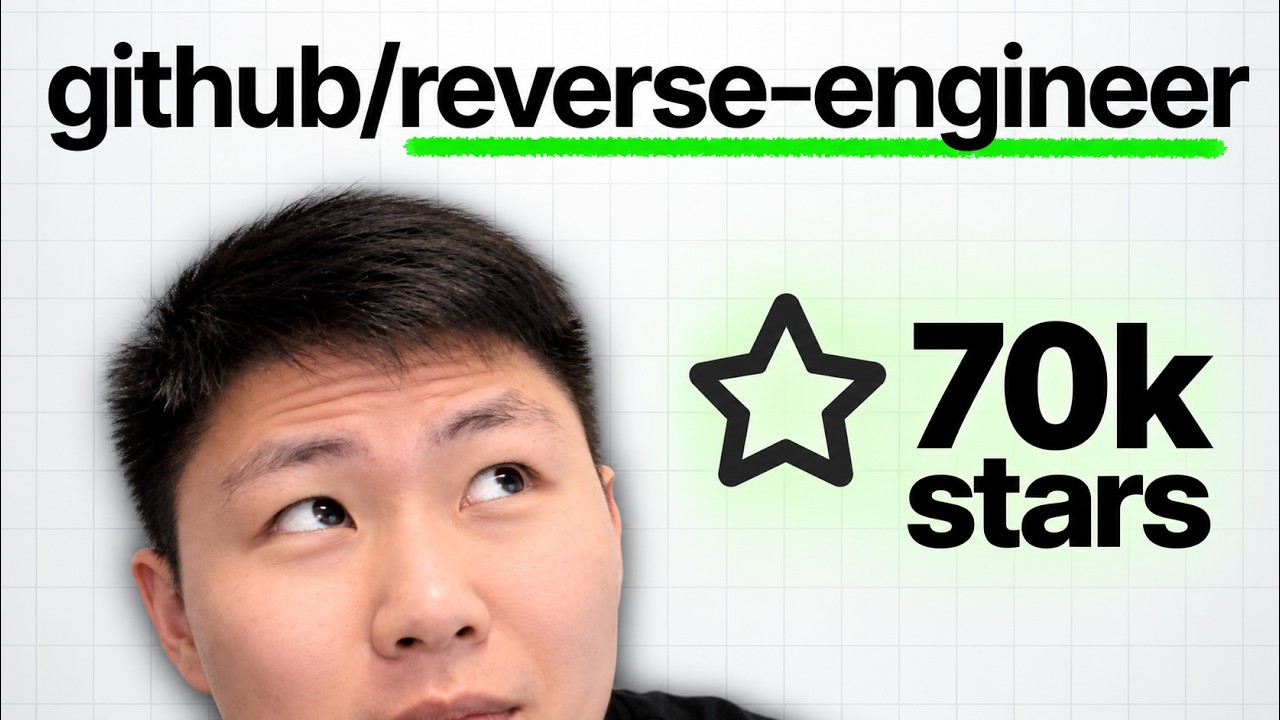
Reverse Engineer Anything: How AI Agents Can Rebuild Existing Software
Discover Reverse Engineer Anything (REA), an open-source toolkit that helps AI coding agents investigate existing applications, analyze technical evidence, and recreate software features. Learn how it works and what SaaS founders can learn from it.
E
Eric
October 24, 2026•5.315 min read
Reverse Engineer Anything: How AI Agents Can Rebuild Existing Software
What if an AI coding agent could do more than recreate an interface from a screenshot? What if it could investigate an existing application, analyze how it works, and use that evidence to build a similar product? That is the idea behind Reverse Engineer Anything (REA), an open-source project designed to help AI coding agents investigate software through specialized tools and structured workflows.What Is Reverse Engineer Anything?
REA helps developers investigate existing applications and gather technical evidence before attempting to recreate their features. Rather than relying exclusively on screenshots or written descriptions, an AI agent can use available analysis tools to inspect application files, structures, dependencies, and implementation details. The project connects AI agents with specialized tools through the Model Context Protocol (MCP). Depending on the target and available tools, reverse-engineering workflows can cover web applications, desktop software, native binaries, and other supported application formats. The objective is simple: give the AI agent more context before it starts building. Explore the project: https://github.com/morluto/reaHow Does REA Work?
1. Inspect the application
First, identify the application or feature you want to understand. The AI agent uses the relevant tools to examine available files, dependencies, application structure, and other technical evidence. For native binary analysis, tools such as Hopper, Ghidra, or IDA may be useful, depending on the target and configuration.2. Analyze the evidence
The agent examines the collected evidence to develop an understanding of how the application behaves. Depending on the tools available, this may include source code, pseudocode, assembly, strings, symbols, and runtime behavior. This provides a stronger technical foundation than asking an AI model to reproduce a product from a screenshot alone.3. Rebuild the feature
Once enough evidence has been gathered, the agent can use its findings to implement a similar feature in another project. For example, a developer could investigate an existing search experience, document its behavior, and build a comparable implementation using their own technology stack. The result still needs testing. REA does not guarantee perfect reproduction or recovery of an application's original source code.How to Install REA
Start with a compatible Node.js installation, npm, and a supported AI coding agent. The project provides an installation workflow through npm:
npx rea-agents setup
Case Study: Recreating Wispr Flow
In a demonstration, Eric shows how he used REA with an AI coding agent to investigate and recreate a version of Wispr Flow, a voice-to-text desktop application. The recreated version shown in the demonstration includes:- Keyboard shortcuts: Trigger voice input through a shortcut.
- Voice transcription: Convert speech into text.
- Multilingual input: Demonstrate transcription involving multiple languages.
- Note-taking: Access previous transcripts and meeting notes.
- Local processing: The creator demonstrates local transcription in the recreated application.
Why REA Matters for Developers
AI coding agents are changing how developers approach software implementation. REA extends this approach by helping agents gather technical evidence before building a feature.Learn from existing products
Developers can investigate how features behave rather than relying entirely on assumptions.Reduce investigation effort
Specialized tools can help gather evidence that would otherwise require substantial manual exploration.Prototype faster
Once a feature is understood, developers can use AI agents to implement and test their own versions.Improve technical understanding
Reverse engineering can reveal application structures and implementation details that are not obvious from the user interface. These benefits do not remove the need for engineering judgment, security reviews, testing, and respect for software licenses and intellectual property.Is Code Still a Competitive Advantage?
One of the central business arguments in Eric's demonstration is that code alone may become a less durable competitive advantage as AI makes software easier to reproduce. If competitors can implement similar features more quickly, what makes a software business difficult to replace? Brand and trust. Customers need a reason to choose your product and continue using it. Distribution. Even a useful product needs reliable ways to reach potential customers. Customer relationships. Understanding users and consistently solving their problems can build loyalty. Data and insights. Product feedback and usage patterns can inform improvements when privacy and security are respected. Execution. A sustainable business requires more than shipping features. Pricing, support, retention, and marketing also matter. These advantages do not appear automatically. They develop through consistent work and a strong understanding of the customers a business serves.What SaaS Founders Can Learn From REA
Instead of copying an entire product, founders can use a structured approach to competitive research.- Identify a product that solves a problem relevant to your audience.
- Select one feature worth investigating.
- Study its observable behavior and available technical evidence.
- Document what makes the experience useful.
- Build your own implementation around your customers' needs.
- Measure whether the change improves adoption, satisfaction, or retention.
Final Thoughts
Reverse Engineer Anything is an interesting development in AI-assisted software engineering. By connecting coding agents with specialized analysis tools, it helps them investigate applications and use technical evidence to guide new implementations. The broader lesson is that building software is only one part of creating a successful product. As AI reduces some of the effort involved in implementation, understanding customers, establishing trust, reaching the right audience, and delivering lasting value become increasingly important. For developers interested in AI agents and reverse engineering, REA is a project worth exploring.Resources
- Reverse Engineer Anything: https://github.com/morluto/rea
- Investigate the project's official documentation and repository for current installation instructions and supported tools.
Found this useful?
Save it for later or share it with someone who might need it.
Discussion
Share your thoughts on this article.
Checking sign-in status...
Loading comments...