Back to Articles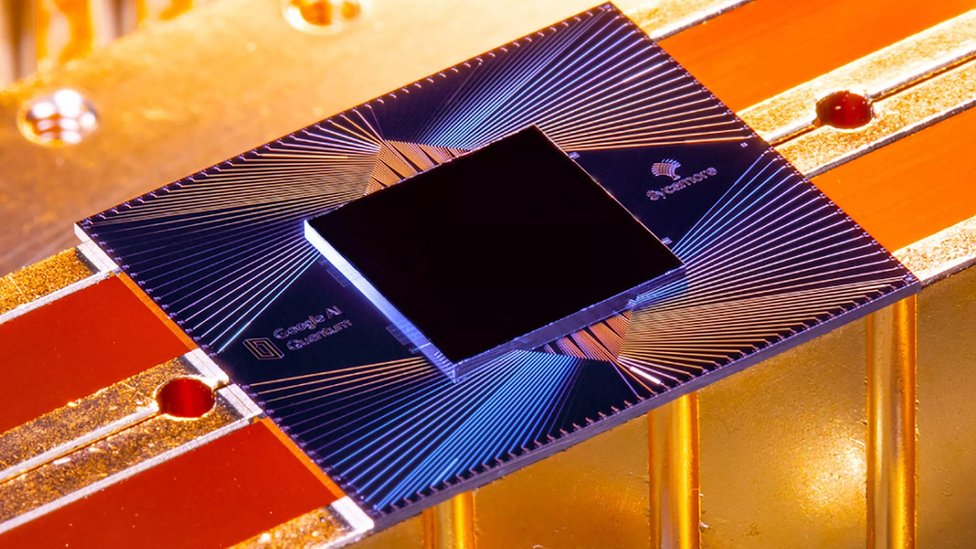
Google's Quantum Breakthrough: Surpassing Supercomputers
Discover how Google's latest quantum computing algorithm achieved a milestone beyond the capabilities of classical supercomputers and what it means for the future.
H
Hirely
October 22, 2025•2.2 min read
Google's Quantum Computing Milestone
Google has announced a historic achievement in quantum computing, developing an algorithm capable of performing tasks beyond the reach of classical supercomputers. The algorithm computed the structure of molecules, which could enable breakthroughs in medicine, materials science, and other fields. ---The Significance of Quantum Advantage
Google stated that this is the first verifiable algorithm run by a quantum computer surpassing supercomputers. This "beyond-classical" computation marks a key step toward scalable quantum verification, bringing quantum computers closer to practical applications. Michel Devoret, Nobel laureate and chief scientist at Google's Quantum AI unit, called it a new milestone toward full-scale quantum computation. ---How the Algorithm Works
The algorithm allows a quantum computer to operate 13,000 times faster than classical computers on this specific task. It was verified against nuclear magnetic resonance (NMR) data, revealing molecular details that classical techniques could not easily capture. Winfried Hensinger, professor of quantum technologies, said this demonstrates quantum advantage: performing a task that is impossible with classical systems. ---Limitations and Future Challenges
Despite the achievement, fully fault-tolerant quantum computers capable of broader applications are still years away. These require machines with hundreds of thousands or millions of qubits, far beyond current hardware capabilities. Current quantum computers need highly controlled environments to maintain qubit stability, as even minor disturbances can disrupt computation. Hartmut Neven, VP of engineering at Google, estimates real-world applications may be feasible within five years, even with this breakthrough. ---Implications for AI and Security
Quantum computing could generate unique datasets for AI models, improving their capabilities. However, progress also raises cybersecurity concerns, as future quantum systems could break classical encryption, driving the need for quantum-resistant cryptography. ---Key Takeaways
- Google's algorithm demonstrates the power and potential of quantum computing.
- Current quantum computers show limited, task-specific advantages, but signal strong growth.
- Full-scale, practical quantum computers will require millions of qubits and advanced infrastructure.
- Quantum computing will impact AI, materials science, medicine, and cybersecurity in the near future.
Recommended Learning Resource
To understand the fundamentals and implications of quantum computing, check out Quantum Computing Fundamentals. It's ideal for learning qubits, algorithms, and real-world applications, helping you stay ahead in this rapidly evolving field. ---Final Thoughts
Google's breakthrough marks a significant step forward in quantum computing, showing how specialized algorithms can outperform classical supercomputers. While practical, everyday applications are still years away, this milestone proves that quantum technology is gradually becoming a powerful tool for science, AI, and industry. Stay informed, explore quantum computing fundamentals, and be ready for the next wave of technological innovation. ---Found this useful?
Save it for later or share it with someone who might need it.
Discussion
Share your thoughts on this article.
Checking sign-in status...
Loading comments...