Back to Articles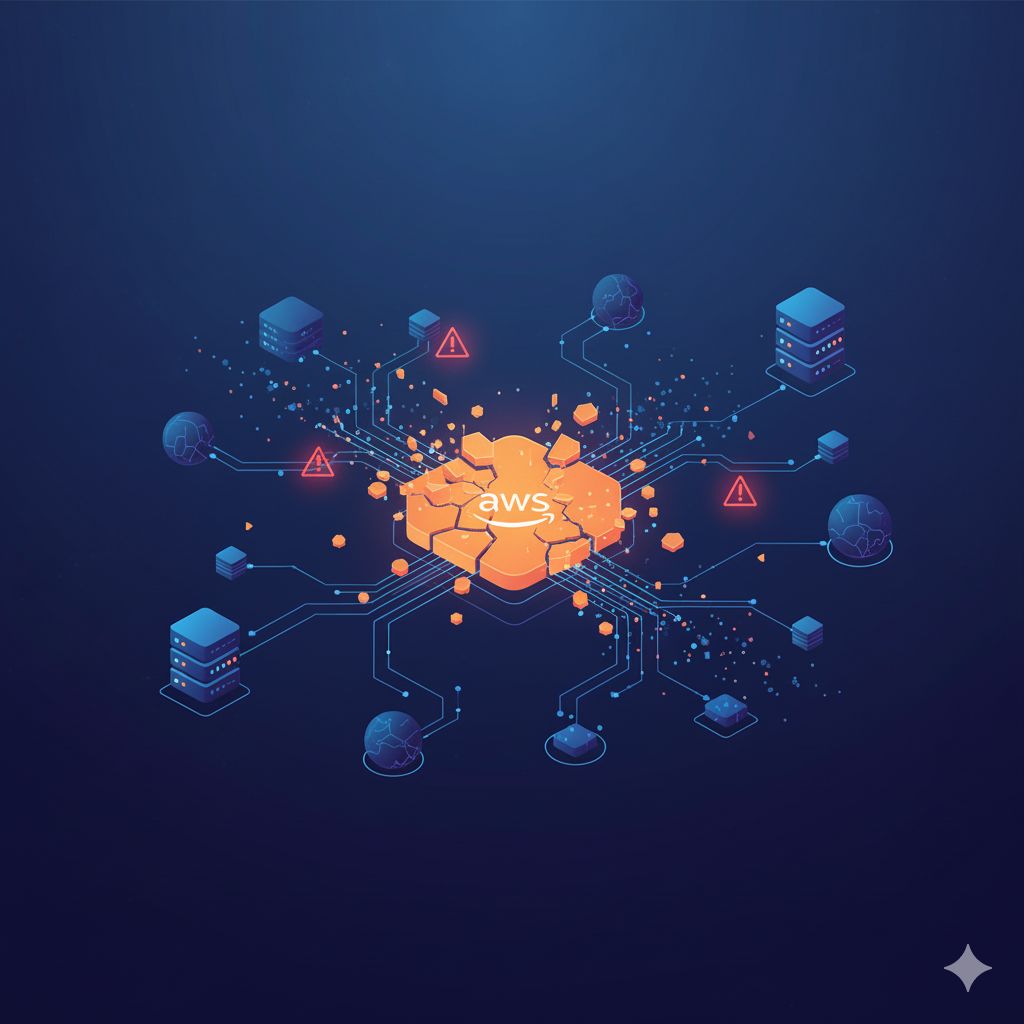
AWS Outage: When Putting All Your Eggs in One Basket Breaks the Internet
The recent AWS outage that took down Canva, Snapchat, and Signal reveals a critical vulnerability in our digital infrastructure: the Single Point of Failure.
H
Hirely
October 21, 2025•4.96 min read
When the Internet Held Its Breath This Morning
This morning, major platforms like Canva, Snapchat, Amazon services, Perplexity, and Signal went dark simultaneously. For users worldwide, it felt like a mini digital apocalypse. But don't panic. According to Perplexity's CEO, the culprit was a technical issue with Amazon Web Services (AWS), Amazon's cloud infrastructure service. Most affected sites are now back online. However, this incident highlights a critical concept well-known to cybersecurity and IT professionals: the Single Point of Failure (SPOF). ---The Single Point of Failure: A Digital House of Cards
What Is a SPOF?
Imagine putting all your eggs in one basket. If that basket drops, you lose everything. In tech terms, a Single Point of Failure is any component whose malfunction can bring down an entire system.The AWS Domination Problem
The affected sites share one thing in common: they all run on AWS, which controls over 30% of the global cloud services market. When AWS sneezes, a significant portion of the internet catches a cold. This concentration creates systemic vulnerability. It's not about AWS being unreliable-it's about what happens when any single provider becomes too critical to the global digital infrastructure. ---The Same Risk Applies to Your Data
The Data Breach Parallel
This "all eggs in one basket" problem isn't limited to cloud infrastructure. It's equally dangerous for data security. When you hear about massive data breaches in the news, it often follows this pattern:- A company stores all its data in one centralized location
- A cybercriminal breaches the perimeter defense (it happens-even strong defenses can be penetrated)
- Once inside, the attacker has access to everything
Resilience Through Redundancy and Segmentation
The solution isn't perfect security (which doesn't exist) but resilient architecture:1. Redundancy: Always Have a Plan B
For Infrastructure:- Multi-cloud strategy: Distribute services across AWS, Azure, and Google Cloud
- Geographic redundancy: Don't rely on a single AWS region
- Backup systems: Maintain failover alternatives
- Regular backups in multiple locations
- Disaster recovery plans
- Alternative access methods
2. Segmentation: Divide and Protect
Network Segmentation:- Isolate critical systems from general networks
- Separate production, development, and testing environments
- Limit lateral movement for potential attackers
- Store sensitive data separately from general data
- Implement least-privilege access controls
- Use encryption layers
The Cost-Benefit Reality Check
Here's the uncomfortable truth: redundancy and segmentation are expensive.- Doubled infrastructure costs
- Increased complexity
- Need for specialized expertise
- Operational overhead
Lessons from Today's Outage
For Businesses
Immediate Actions:- Audit your infrastructure dependencies
- Identify your own single points of failure
- Document your disaster recovery plans
- Test your backup systems regularly
- Consider multi-cloud architecture for critical services
- Implement data segmentation policies
- Build redundancy into mission-critical systems
- Budget for resilience, not just features
For Individuals
- Don't rely on a single service for critical workflows
- Maintain offline backups of important data
- Understand that "the cloud" is just someone else's computer-and it can fail
Real-World Impact: The Numbers
When AWS goes down, the consequences ripple globally:- Millions of users unable to access services
- Businesses losing revenue every minute of downtime
- Productivity grinding to a halt for companies dependent on affected tools
- Trust erosion in digital infrastructure
The Uncomfortable Question: Is This Sustainable?
As our digital infrastructure becomes increasingly centralized among a few tech giants (AWS, Azure, Google Cloud), we face a paradox: Centralization benefits:- Economies of scale
- Advanced features
- Professional management
- Cost efficiency
- Systemic vulnerability
- Limited alternatives during outages
- Reduced competition
- Dependency lock-in
Practical Takeaways
The Golden Rule of Digital Resilience
It's not a question of IF something will fail, but WHEN. Plan accordingly:- Identify: Map all your single points of failure
- Prioritize: Determine which systems absolutely cannot go down
- Diversify: Build alternatives for critical dependencies
- Test: Regularly simulate failures to validate your backup plans
- Document: Ensure your team knows what to do when things break
Quick Wins You Can Implement Today
- Enable multi-region deployments on your cloud provider
- Set up monitoring for your critical dependencies
- Create a communication plan for when services go down
- Maintain offline copies of essential business data
- Document your third-party service dependencies
Final Thoughts
Today's AWS outage was a wake-up call, not a catastrophe. Services recovered quickly, and most users barely felt the impact. But it exposed a fundamental truth: our digital world is more fragile than we like to admit. Whether you're a startup founder, an IT professional, or a Fortune 500 CTO, the lesson is the same: resilience requires investment. You can't prevent every failure, but you can design systems that survive them. Don't wait for the next outage to start planning. Your future self-and your users-will thank you. --- Have you been affected by today's outage? What redundancy measures does your organization have in place? Share your thoughts in the comments below. ---Resources for Building Resilient Systems
- AWS Well-Architected Framework: Reliability Pillar
- Microsoft Azure Reliability Documentation
- Google Cloud Architecture Center
- NIST Cybersecurity Framework
- ISO 27001 Business Continuity Standards
Found this useful?
Save it for later or share it with someone who might need it.
Discussion
Share your thoughts on this article.
Checking sign-in status...
Loading comments...