AI at Work: Why Replacing People with AI Often Fails
Major companies are cutting thousands of jobs for AI. But the ones replacing humans completely are losing money. Here's why AI works better when it helps people, not replaces them.
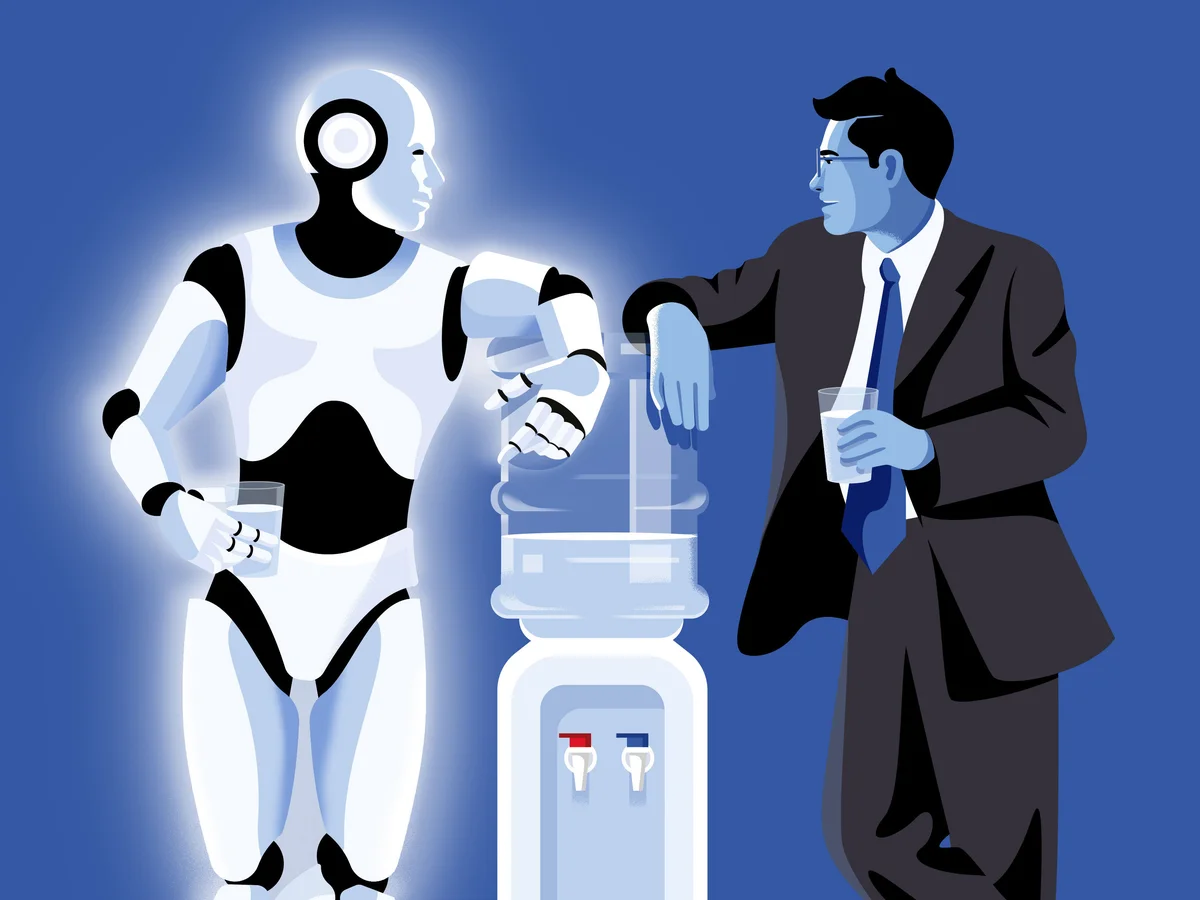
Imagine Companies Making More Money While Cutting Thousands of Jobs
Picture this: A company fires 3,000 workers. Replaces them with AI chatbots. Six months later, customers are angrier, problems take longer to solve, and the company loses millions.
This isn't a horror story. It's happening right now at some of the world's biggest companies.
After watching how businesses are using AI, a clear pattern emerges: AI creates more value when it helps people than when it replaces them completely.
These are real lessons from real companies, both winners and losers.
The Numbers Are Shocking
Big changes are happening right now:
- 48,000 jobs cut at UPS
- 30,000 jobs cut at Amazon
- 24,000 jobs cut at Intel
- 16,000 jobs cut at Nestlé
- 11,000 jobs each cut at Accenture and Ford
- 7,000 jobs cut at Microsoft
PwC, Salesforce, and Meta are following the same path.
But here's the strange part: these companies are making more money than before.
This isn't a crisis. It's a complete change in how businesses work. AI is becoming a normal part of work.
But not all companies are doing it right.
1. When Replacing People Goes Completely Wrong
Some companies tried to replace workers entirely with AI. The results were disasters.
Klarna: The Chatbot That Made Everything Worse
What They Did: Went from 5,000 customer service workers to 2,000. Used chatbots instead of people.
What Happened:
- Problems took 27% longer to solve
- Customers were 35% less happy
- The company thought they'd save money but created bigger problems
Duolingo: Bad Translations Killed Growth
What They Did: Fired human translators. Used AI for all translations.
What Happened:
- 42% of translations had mistakes
- 18% fewer people kept using the app
- Users lost trust in the product
Sports Illustrated: The $5 Million Mistake
What They Did: Replaced journalists with AI writers.
What Happened:
- 40% fewer people visited their website
- Lost $5 million in revenue
- Damaged their reputation permanently
The Pattern: Companies that completely replace people with AI usually fail.
But other companies did something different. They used AI to help their workers, not replace them. These companies got more work done and spent less money.
2. Three Big Changes Happening Right Now
Change #1: Money is Moving from People to Machines
Companies are spending less on workers. They're spending more on AI computers, storage, and software.
The Problem? If the AI doesn't work well, the company loses twice:
- They lost good workers
- They wasted money on AI that doesn't work
Change #2: Some Tasks Are Being Automated
AI is taking over specific tasks:
- Answering simple customer questions
- Looking at data and finding patterns
- Writing basic content
- Planning schedules
When It Works: AI does the boring stuff. People focus on important work.
When It Fails: Companies just fire people without changing how work gets done.
Change #3: Bosses Want Results Yesterday
Companies don't want to wait years to see if AI works. They want to see results in 3-6 months.
This Creates a Problem: Companies rush to use AI without testing it properly. That's when big mistakes happen (see Klarna, Duolingo, Sports Illustrated above).
3. Why AI Isn't as Smart as People Think
Here's what failed companies learned the hard way:
AI is good at following rules. AI is terrible at making good decisions.
What a Customer Service Worker Really Does
They don't just answer questions. They:
- Notice when someone is upset
- Change how they talk based on the situation
- Spot bigger problems in the system
- Know when to ask for help from managers
- Build trust with customers
AI can't do any of that well.
What a Translator Really Does
They don't just change words from one language to another. They:
- Understand cultural differences
- Get jokes and wordplay
- Know when things don't make sense
- Adapt to different audiences
AI misses all these details.
What a Writer Really Does
They don't just put words on a page. They:
- Check facts carefully
- Make stories interesting
- Build credibility over time
- Understand what readers want
AI can write words. But it can't do journalism.
Bottom Line: AI can help with all these jobs. But AI can't do them alone.
4. Companies That Are Actually Winning
Smart companies ask a different question.
They don't ask: "How can we cut workers?"
They ask: "What can we do with AI that we couldn't do before?"
GitHub Copilot: Making Programmers 55% Faster
What They Did: Built AI to help programmers write code faster.
The Result:
- Programmers didn't lose their jobs
- They code 55% faster
- They spend more time solving hard problems instead of typing
Why It Works: The AI does the boring repetitive work. Humans do the creative thinking.
Morgan Stanley: Giving Time Back to Analysts
What They Did: Gave their financial analysts AI that reads research reports.
The Result:
- Analysts didn't lose their jobs
- AI reads 100,000 pages in seconds
- Analysts spend more time helping customers make smart decisions
Why It Works: AI handles information. Humans provide wisdom.
Notion AI: Freeing Up Project Managers
What They Did: Built AI to help write documents and meeting notes.
The Result:
- Project managers didn't lose their jobs
- Documentation happens 3x faster
- Managers spend more time thinking and planning
Why It Works: AI speeds up admin work. Humans focus on strategy.
5. The Invisible Work That AI Can't See
This is the most important section.
Every job has invisible work. Work that seems simple but is actually complex.
When companies fire people and replace them with AI, they lose all this invisible work. That's why they fail.
What a Salesperson Really Does
Not just: Sell products
Actually:
- Build long-term relationships
- Notice small details about customers
- Understand office politics
- Know how to talk to different personality types
- Read body language and tone
AI can help find leads. AI can't build relationships.
What a Manager Really Does
Not just: Give people tasks
Actually:
- Teach and coach team members
- Keep people motivated
- Solve conflicts before they explode
- Protect the team from bad decisions
- Know when someone is struggling
AI can help organize work. AI can't lead people.
What a Designer Really Does
Not just: Make things look nice
Actually:
- Understand how users think
- Predict problems before they happen
- Balance beauty with ease of use
- Test and improve based on feedback
- Make choices that support business goals
AI can generate designs. AI can't understand users.
6. The Big Question Every Company Must Answer
Here it is:
How do you build a lasting advantage when you have people, data, and AI working together?
The best companies in 2026 won't be the ones that use the most AI.
The best companies will be the ones that know exactly where AI helps people do what really matters:
- Solving hard problems that need creativity
- Building relationships that create trust
- Making smart decisions in complex situations
- Creating new ideas that competitors can't copy
7. What This Really Takes (And Why Most Companies Won't Do It)
To make your team better with AI takes real courage:
You Must: Train Your Workers
Not just: Replace them and save money now
Why It's Hard: Training costs money and takes time. Bosses want results this quarter.
You Must: Change How Work Gets Done
Not just: Add AI on top of broken processes
Why It's Hard: Changing processes is complicated. It requires admitting the old way wasn't perfect.
You Must: Accept a Learning Period
Not just: Expect perfect results immediately
Why It's Hard: Shareholders want profits now. Experiments look like wasted money on spreadsheets.
You Must: Measure What Really Matters
Not just: Count how much money you save on payroll
Why It's Hard: Real success (like customer trust or employee happiness) is harder to measure than cost savings.
Reality Check: Most bosses don't have patience for this. Especially when they need to show good results every 3 months.
8. The Real Danger Nobody Is Talking About
You still have time to do this right. But that time is running out fast.
The danger isn't being "slow with AI."
The real danger is:
Rushing → Breaking trust with workers → Creating problems that take years to fix
Here's what happens when you rush:
- You fire good people who understood the invisible work
- AI makes mistakes because it doesn't understand context
- Customers get frustrated because problems don't get solved
- Remaining workers lose trust because they're next
- Competitors who did it right take your customers
- You try to hire back the people you fired but they moved on
The worst part? This damage takes 3-5 years to repair. But the cost savings only lasted 6 months.
9. What Winning Companies Understand
AI isn't just about technology. It's about changing how your whole organization works.
This means:
- Rethinking job roles (not eliminating them)
- Training people on new skills
- Redesigning workflows
- Measuring new success metrics
- Building a culture that embraces change
You can't do all of that with just one PowerPoint presentation in a meeting.
The Bottom Line
The real question isn't: > "Can AI replace this job?"
The real question is: > "How can AI make this team better, happier, and more focused on what matters?"
AI creates more value when it helps people than when it replaces them.
Companies that forgot this are failing right now. Companies that remember this are winning big.
Key Takeaways
✓ Pure replacement usually fails - Klarna, Duolingo, and Sports Illustrated prove it
✓ Augmentation wins - GitHub, Morgan Stanley, and Notion show the way
✓ Invisible work matters - Every job has complexity AI can't see
✓ Speed kills - Rushing AI deployment creates disasters
✓ Culture is key - This is organizational change, not just technology
The choice is yours. But you need to decide soon.
The companies making smart decisions today will dominate tomorrow. The companies rushing to cut costs will be fixing problems for years.
Which one will you be?